If you work with industrial computers, test equipment, telecom systems, railway electronics, or embedded systems, you may come across the terms VME, CompactPCI, and Eurocard.
These terms are sometimes used interchangeably, but they do not mean the same thing.
Eurocard primarily describes a standardized board and mechanical format. VME and CompactPCI are computer and backplane architectures that use Eurocard-style mechanical dimensions.
Understanding the difference is important when selecting a 19-inch subrack, PCB guide rail, front panel, card extractor, backplane, or other subrack components.
This guide explains the key differences between VME, CompactPCI, and Eurocard systems and how they relate to 19-inch subracks.
What Is a Eurocard?
A Eurocard is a standardized printed circuit board format used in modular electronic systems.
The Eurocard concept defines mechanical dimensions and interfaces that allow PCBs to be installed into standardized subracks.
A typical Eurocard system includes:
- PCB
- Front panel
- PCB guide rail
- Backplane
- Connector
- Card extractor or handle
- Subrack
Eurocard systems are commonly associated with 3U and 6U formats.
The important point is:
Eurocard is primarily a mechanical format, not a computer bus architecture.
A Eurocard PCB can therefore be used in different system architectures, including VME and CompactPCI.
What Is VME?
VMEbus, originally developed as a computer bus architecture, is widely used in industrial, military, transportation, telecom, and embedded computing applications.
VME systems use Eurocard-style PCBs and typically install into a 19-inch subrack.
Common VME board formats include:
- 3U
- 6U
The VME architecture uses a backplane to connect processor boards, I/O boards, storage modules, and other functional cards.
A typical VME system consists of:
VME CPU → VME backplane → VME I/O cards → 19-inch subrack
The mechanical design and electrical bus architecture are therefore separate considerations.
The mechanical side determines whether the board physically fits into the subrack, while the VME specification determines how the boards communicate through the backplane.
What Is CompactPCI?
CompactPCI (CPCI) is another modular computer architecture based on the Eurocard form factor.
CompactPCI was developed for applications requiring rugged, modular, high-performance embedded computing.
Like VME, CompactPCI systems typically use:
- Eurocard-style PCBs
- Backplanes
- Plug-in modules
- 19-inch subracks
- Guide rails
- Front panels
- Card extractors
However, CompactPCI uses the PCI bus architecture and a different backplane connector and electrical architecture from VME.
CompactPCI is widely associated with applications such as:
- Industrial automation
- Telecommunications
- Transportation
- Railway systems
- Data acquisition
- Automated test equipment
- Industrial computers
VME vs. CompactPCI vs. Eurocard
The easiest way to understand the difference is to separate the mechanical format from the electrical architecture.
| Feature | Eurocard | VME | CompactPCI |
|---|---|---|---|
| What is it? | Mechanical/board format | Computer bus/system architecture | Computer bus/system architecture |
| PCB format | Eurocard | Eurocard-based | Eurocard-based |
| Typical formats | 3U / 6U | 3U / 6U | 3U / 6U |
| Backplane | Application-dependent | VME backplane | CompactPCI backplane |
| Bus architecture | Not defined by itself | VMEbus | PCI-based |
| 19-inch subrack | Common | Common | Common |
| PCB guide rails | Yes | Yes | Yes |
| Front panels | Yes | Yes | Yes |
| Card extractors | Common | Common | Common |
| Typical use | Modular electronics | Embedded/industrial computing | Embedded/industrial computing |
The most important takeaway is:
Eurocard defines the mechanical platform, while VME and CompactPCI define system architectures that use this platform.
Are VME and CompactPCI the Same Size?
Not necessarily.
VME and CompactPCI can use similar Eurocard mechanical dimensions, but the complete plug-in-unit design is not automatically interchangeable.
A board can have a similar:
- Height
- Width
- Depth
- Front-panel size
while still using a completely different:
- Backplane connector
- Connector position
- Pin assignment
- Bus architecture
- Keying system
- Front-panel interface
Therefore, you should never assume that a VME board can simply be replaced with a CompactPCI board because both are described as “3U Eurocard.”
3U VME vs. 3U CompactPCI
Both systems can use a 3U Eurocard-style board format.
The nominal height associated with 3U is:
3U × 44.45 mm = 133.35 mm
However, the actual PCB and front-panel dimensions depend on the applicable mechanical specification.
The major difference is not simply the external dimensions.
The backplane architecture is different.
3U VME
A typical 3U VME system includes:
- 3U VME boards
- VME backplane
- VME connectors
- Front panels
- Guide rails
- Card extractors
3U CompactPCI
A typical 3U CompactPCI system includes:
- 3U CompactPCI boards
- CompactPCI backplane
- PCI-based connectors
- Front panels
- Guide rails
- Card extractors
Therefore, when sourcing replacement parts, the system architecture and connector interface must be identified, not just the U height.
6U VME vs. 6U CompactPCI
6U systems provide additional vertical PCB area and are often used when more components, I/O interfaces, or processing hardware are required.
The nominal 6U height is:
6U × 44.45 mm = 266.70 mm
Again, the actual PCB, front-panel, and plug-in-unit dimensions must be checked against the applicable specification.
6U VME and 6U CompactPCI systems may look mechanically similar from the outside, but their internal electrical architecture can be completely different.
This is why replacement components should be identified using the complete system configuration.
What Components Are Shared?
One of the interesting aspects of VME, CompactPCI, and other Eurocard-based systems is that many mechanical components can be similar or even compatible, depending on the specific design.
Examples include:
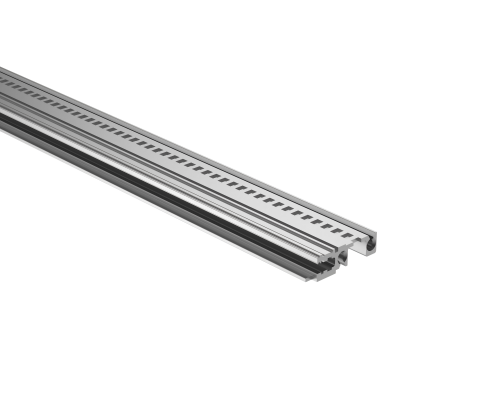
PCB Guide Rails
Guide rails support and position the PCB inside the subrack.
They are commonly made from:
- Plastic
- Aluminum
- Engineering polymers
The rail profile, slot width, length, and mounting interface must match the PCB and subrack.
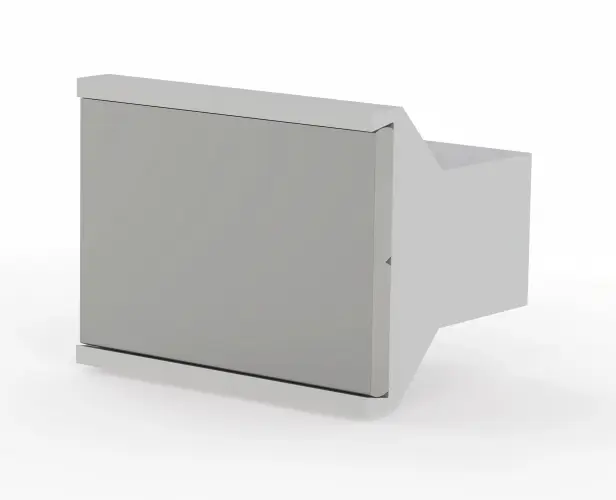
Front Panels
Front panels provide:
- PCB protection
- Module identification
- Connector access
- Handle mounting
- EMC shielding interface
A 3U front panel designed for one system should not automatically be assumed compatible with another system. Mounting holes, width, connector cutouts, and extractor positions must be checked.
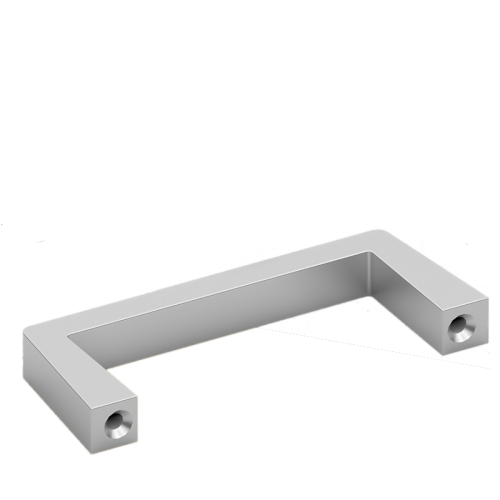
PCB Extractors
Card extractors provide mechanical leverage for inserting and removing boards.
Their mounting location and geometry must match the front panel and PCB.
EMC Components
Some systems require:
- EMC gaskets
- Conductive fabric gaskets
- Metal mesh gaskets
- Grounding clips
- Conductive springs
These components help maintain electrical continuity and reduce unwanted electromagnetic leakage.
Can a VME Subrack Be Used for CompactPCI?
Sometimes the mechanical enclosure or subrack platform can be adapted, but mechanical similarity does not mean electrical compatibility.
Before converting a VME system to CompactPCI, check:
- PCB dimensions
- Front-panel dimensions
- Guide-rail positions
- Backplane dimensions
- Connector locations
- Power requirements
- Cooling requirements
- EMC requirements
- Card depth
- Mounting-hole positions
The backplane is especially important.
Even if the boards fit physically into the same 19-inch chassis, the VME and CompactPCI backplanes are not electrically interchangeable.
How Does IEC 60297 Relate to VME and CompactPCI?
IEC 60297 provides the mechanical framework for the 482.6 mm (19-inch) equipment system.
The standard defines fundamental dimensions for equipment such as:
- Subracks
- Chassis
- Racks
- Cabinets
- Front panels
The height system is based on:
1U = 44.45 mm
Therefore:
3U = 133.35 mm
6U = 266.70 mm
VME and CompactPCI systems can use this mechanical environment, but their electrical specifications are separate.
This distinction is particularly important for manufacturers of subrack components.
A supplier may manufacture a mechanically compatible:
- 3U front panel
- PCB guide rail
- Card extractor
- Mounting bracket
- EMC gasket
while the electrical architecture remains determined by the VME or CompactPCI system.
Which System Should You Choose?
The answer depends on the application.
Choose VME When:
VME may be appropriate when you need:
- Mature industrial computing
- Long-life embedded systems
- Existing VME infrastructure
- Industrial or transportation applications
- Compatibility with legacy VME equipment
Choose CompactPCI When:
CompactPCI may be appropriate when you need:
- PCI-based architecture
- Modular industrial computing
- High-density I/O
- Rugged embedded systems
- Existing CompactPCI infrastructure
Choose Eurocard When:
“Eurocard” is the appropriate term when discussing:
- PCB dimensions
- Subrack mechanical design
- Front panels
- Guide rails
- Plug-in units
- Card cages
- Mechanical compatibility
It is not an alternative bus architecture to VME or CompactPCI.
What Should You Tell a Subrack Parts Supplier?
If you need replacement components for a VME or CompactPCI system, do not simply tell the supplier:
“I need a 3U Eurocard part.”
Provide more information.
The ideal inquiry should include:
- System type: VME / CompactPCI / other
- 3U or 6U
- Original part number
- PCB dimensions
- Part dimensions
- Mounting-hole positions
- Material
- Surface treatment
- Required quantity
- Technical drawing
- Product photos
- Applicable standard
For difficult replacement projects, a photograph plus several key dimensions can be enough for an initial engineering evaluation.
If the component is a custom front panel, PCB guide rail, extractor, bracket, or EMC component, a technical drawing is strongly recommended.
VME vs. CompactPCI vs. Eurocard: Key Takeaway
The relationship can be summarized in one simple diagram:
Eurocard = Mechanical Format
↓
VME = Bus/System Architecture
CompactPCI = Bus/System Architecture
Both VME and CompactPCI can use Eurocard-style mechanical components and 19-inch subracks, but their electrical interfaces and backplanes are different.
Therefore, when selecting or replacing a component, always separate two questions:
1. Will it fit mechanically?
2. Will it work electrically?
For mechanical subrack components, the first question is usually the most important. Check the dimensions, mounting holes, pitch, PCB interface, front-panel geometry, and guide-rail configuration before ordering.
Conclusion
VME, CompactPCI, and Eurocard are related but fundamentally different concepts.
Eurocard describes a standardized modular PCB and mechanical approach. VME and CompactPCI are system architectures that use Eurocard-style boards and backplanes.
For engineers and purchasing teams, this distinction can prevent costly component-selection mistakes.
If you are sourcing 19-inch subrack replacement parts, always provide the system type, board format, dimensions, original part number, drawing, and photos whenever available.
At Subrack Parts, we support custom and replacement components for Eurocard-based systems, including PCB guide rails, front panels, PCB extractors, handles, mounting hardware, EMC/EMI grounding components, and custom subrack parts.
Have a VME, CompactPCI, or Eurocard component that needs replacement?
Send us the original part number, drawing, dimensions, or photo. We can help evaluate the mechanical interface and develop a suitable replacement or custom alternative.