When an electronic system has been in service for 10 or 15 years, the electronics may still work well, but some mechanical components can become difficult to source.
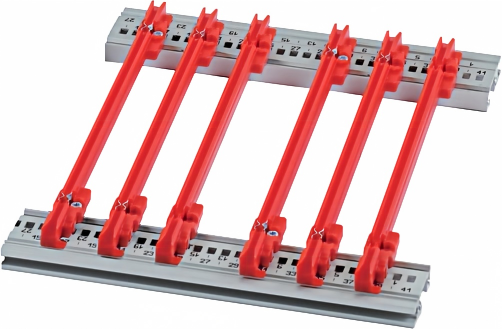
A PCB guide rail may be discontinued. A front panel may no longer be available from the original supplier. An EMC gasket may have changed specification. Handles, mounting hardware, card guides, grounding clips, or other small mechanical parts may be missing or damaged.
Replacing the entire 19-inch subrack is often unnecessary.
In many cases, the better solution is to identify the original component and find a compatible subrack replacement part, a custom replacement, or a newly manufactured equivalent.
This article explains how to approach discontinued and obsolete subrack components and what information you should provide to a supplier.
What Are 19 Inch Subrack Replacement Parts?
19 inch subrack replacement parts are mechanical or electromechanical components used to repair, maintain, upgrade, or retrofit an existing 19-inch subrack system.
Typical replacement components include:
- PCB guide rails
- Card guides
- PCB injector and extractor handles
- Front panels
- Subrack handles
- Horizontal rails
- Vertical rails
- Mounting brackets
- EMC and EMI grounding components
- Conductive gaskets
- Grounding clips
- Screws and inserts
- Backplane mounting hardware
- Connector mounting accessories
- Card retainers
- Supporting brackets
- Thermal management components
- Custom machined or sheet-metal components
These components may be used in Eurocard, VME, CompactPCI, industrial control, telecom, railway electronics, test equipment, power electronics, and other rack-mounted systems.
Why Are Subrack Replacement Parts Difficult to Find?
One of the biggest problems with older electronic equipment is not necessarily the electronic components themselves.
It is often the mechanical parts.
A system may still use a standard 19-inch rack, but the internal mechanical components may have been designed 10–20 years ago.
The original supplier may have:
- discontinued the product
- changed the product series
- changed the hole pattern
- changed the material
- stopped supporting an old platform
- increased the minimum order quantity
- extended the lead time
- increased the price significantly
This creates a common maintenance problem:
The equipment is still usable, but the original subrack component is no longer easy to purchase.
Instead of replacing the entire system, companies can investigate compatible subrack parts or custom subrack replacement components.
Discontinued Subrack Parts vs. Obsolete Subrack Components
The terms discontinued and obsolete are often used together, but they describe slightly different situations.
Discontinued subrack parts
A discontinued part is a product that the original manufacturer no longer produces or actively sells.
For example, an old PCB card guide may have been replaced by a newer design.
The original part number may still be known, but normal purchasing channels may no longer provide it.
Obsolete subrack components
An obsolete component is generally associated with an older product platform or technology that is no longer actively supported.
This can be more challenging because documentation, drawings, and technical specifications may also be difficult to obtain.
For older equipment, a supplier may need to work from:
- an original part number
- an old drawing
- dimensions
- photographs
- samples
- installation information
This is why replacement sourcing often requires more than simply searching for a product name.
What Types of Subrack Parts Can Be Replaced?
Many small mechanical components can be reproduced or replaced without changing the complete subrack.
1. PCB Guide Rails and Card Guides
PCB guide rails are among the most commonly replaced components.
They position PCBs inside the subrack and help prevent mechanical damage during insertion and removal.
Replacement selection should consider:
- PCB thickness
- card height
- card length
- mounting method
- rail profile
- hole spacing
- front/rear position
- material
- insulation requirements
For Eurocard and other modular systems, even a small dimensional difference can affect PCB insertion.
2. PCB Injector and Extractor Handles
Injector and extractor handles are frequently used on plug-in boards.
They provide mechanical leverage for inserting and removing PCBs and can also help prevent incorrect insertion when the design includes keying features.
When replacing an old handle, check:
- mounting dimensions
- handle geometry
- PCB thickness
- operating angle
- material
- bracket dimensions
- screw position
- required insertion/extraction force
A compatible replacement should fit the existing PCB and subrack without requiring unnecessary modifications.
3. Front Panels
Front panels are another common type of subrack replacement part.
Older equipment may use custom front panels that are no longer available from the original manufacturer.
A replacement front panel can often be manufactured from the original dimensions or drawing.
Important information includes:
- panel height
- panel width
- thickness
- mounting-hole position
- handle position
- connector cutouts
- ventilation openings
- surface finish
- material
- marking requirements
For custom front panels, the supplier can manufacture according to a drawing or physical sample.
4. EMC and EMI Components
EMC components can become difficult to replace when an older subrack system has been in operation for many years.
Examples include:
- EMC gaskets
- conductive textile gaskets
- conductive fabric
- grounding clips
- shielding fingers
- conductive contact elements
The replacement should not be selected based only on appearance.
The supplier should consider:
- contact position
- compression
- material
- conductivity
- mounting method
- environmental requirements
- shielding requirements
For equipment operating in environments with strict EMC requirements, the replacement component needs to be evaluated as part of the complete enclosure system.
5. Mounting Hardware and Fasteners
Sometimes the problem is surprisingly simple.
A customer may only need:
- M2.5 screws
- M3 screws
- M4 screws
- threaded inserts
- mounting nuts
- brackets
- washers
- panel fasteners
However, finding the exact hardware used in an older system can still be difficult.
A replacement supplier can help identify equivalent hardware based on thread size, length, material, head type, and surface treatment.
Compatible Subrack Parts: What Does “Compatible” Mean?
A compatible subrack part does not necessarily have to come from the original manufacturer.
Compatibility normally means that the replacement can perform the required function while fitting the existing system.
Depending on the application, compatibility may involve:
Mechanical compatibility
The replacement part must fit the existing mounting structure.
Dimensional compatibility
Critical dimensions such as hole positions, height, width, thickness, and spacing must be controlled.
Material compatibility
The material should be appropriate for the mechanical and environmental requirements.
Functional compatibility
The replacement must perform the same basic function as the original component.
Application compatibility
The component should be suitable for the intended application, such as industrial control, railway electronics, telecom, or test equipment.
Therefore, a replacement should not be selected only because it “looks similar.”
When Should You Consider a Custom Subrack Replacement Part?
Sometimes an existing standard component is close to the required specification but does not fit exactly.
This is where custom subrack replacement parts become useful.
Custom manufacturing may be appropriate when:
- the original part has been discontinued
- the original supplier no longer supports the product
- the original MOQ is too high
- the original price is too high
- the original lead time is too long
- the original component is no longer available
- the old component has a special dimension
- the customer needs a modified version
- the equipment requires a small quantity
Custom replacement components can be manufactured from drawings, samples, photographs, or dimensional information.
How to Find a Replacement for an Obsolete Subrack Component
If you are trying to replace a legacy subrack component, start by collecting as much information as possible.
Step 1: Find the Original Part Number
Check:
- product labels
- equipment drawings
- BOMs
- maintenance manuals
- old purchasing records
- supplier catalogs
The original part number is often the fastest way to identify the component.
Step 2: Measure the Existing Part
If the original part number cannot be found, measure the component.
Useful dimensions include:
- overall length
- width
- height
- thickness
- hole diameter
- hole spacing
- mounting position
- PCB thickness
- rail spacing
- screw size
For critical parts, provide measurements with reasonable tolerance information.
Step 3: Take Clear Photos
A few good photographs can significantly improve identification.
Take photos showing:
- the complete component
- the mounting side
- the connection/interface
- important holes and dimensions
- the component installed in the subrack
If possible, place a ruler or caliper next to the component.
Step 4: Provide the Application
Tell the supplier where the component is used.
For example:
- 3U Eurocard subrack
- 6U VME system
- CompactPCI chassis
- industrial control cabinet
- railway electronics
- telecom equipment
- power electronics
- automated test equipment
Application information helps the supplier understand which dimensions and performance requirements are important.
What Information Should You Send to a Replacement Parts Supplier?
You do not necessarily need a complete engineering drawing to start an inquiry.
A useful RFQ can include:
| Information | Example |
|---|---|
| Original part number | OEM part number |
| Component name | PCB guide rail |
| Application | 3U Eurocard subrack |
| Quantity | 100 pcs |
| Dimensions | Length, width, height |
| Material | PC, aluminum, stainless steel, etc. |
| Surface finish | Anodized, plated, passivated, etc. |
| Drawing | PDF/DWG/STEP |
| Photos | Front, back and installed position |
| Required standard | IEC 60297, IEC 61587, etc. |
| Target quantity | Prototype or production |
| Required delivery | Target lead time |
If you only have a photograph and several dimensions, that is still a useful starting point.
Can Chinese Manufacturers Supply Subrack Replacement Parts?
China has a mature manufacturing supply chain for precision mechanical components, sheet-metal fabrication, CNC machining, injection molding, extrusion, stamping, and surface treatment.
For overseas buyers, this can provide an alternative sourcing route when an original subrack component becomes expensive or difficult to obtain.
Depending on the component, Chinese manufacturers can provide:
- CNC machining
- sheet-metal fabrication
- aluminum extrusion
- injection molding
- stamping
- die casting
- laser cutting
- bending
- surface treatment
- assembly
- custom packaging
For replacement projects, the cost advantage is particularly relevant when the original manufacturer has moved an old product into a low-volume or end-of-life production stage.
However, price should not be the only consideration.
For a replacement component, the supplier should also be able to control:
- dimensions
- tolerances
- materials
- surface treatment
- assembly
- quality inspection
- repeatability
The goal is not simply to find a cheaper part.
The goal is to find a reliable replacement that fits the existing system.
Replacement Parts for Legacy 19-Inch Subrack Systems
Many industrial systems have long service lives.
A railway control system, telecom platform, industrial controller, test system, or power electronics platform may remain in operation long after some of its mechanical components have disappeared from the current product catalog.
This creates a market for legacy subrack components and subrack maintenance parts.
Typical requirements include:
- one-time replacement
- small-batch production
- long-term spare parts
- engineering samples
- retrofit projects
- maintenance inventory
- discontinued component replacement
- custom modifications
For equipment with a long service life, establishing a second source for critical mechanical components can also reduce future maintenance risk.
Subrack Retrofit Parts for Existing Equipment
A retrofit does not always mean replacing the complete chassis.
Sometimes only a few mechanical components need to be modified.
Examples include:
- replacing an old card guide
- modifying a front panel
- adding EMC shielding
- changing mounting hardware
- replacing a handle
- adapting a new PCB to an existing subrack
- modifying connector openings
- improving PCB support
- replacing obsolete mounting brackets
This approach can extend the useful life of existing equipment while reducing the amount of mechanical redesign required.
How SubrackParts Helps With Replacement Components
At SubrackParts, the focus is on components used in 19-inch subrack and electronic enclosure systems.
We support customers looking for:
- 19 inch subrack replacement parts
- discontinued subrack parts
- obsolete subrack components
- compatible subrack parts
- subrack spare parts
- subrack maintenance parts
- subrack repair parts
- retrofit components
- custom replacement components
Our product range includes PCB guide rails, card accessories, front panels, handles, EMC/EMI components, grounding parts, mounting hardware, rails, brackets, and other mechanical components.
When the original component is no longer available, customers can send us the original part number, drawing, dimensions, or photographs.
We can review the information and determine whether a standard compatible component or a custom replacement solution is possible.
A discontinued 19-inch subrack component does not necessarily mean that the entire equipment has to be replaced.
For many legacy systems, the practical solution is to identify the required component and source a suitable replacement subrack part, compatible component, or custom-made alternative.
Whether you need a PCB guide rail, front panel, handle, EMC gasket, grounding clip, mounting hardware, or another mechanical component, the most important step is to clearly define the original part and its installation requirements.
If you have an obsolete, discontinued, or difficult-to-source subrack component, send the original part number, drawing, dimensions, or a clear photograph.
SubrackParts can help you identify a suitable replacement or develop a custom alternative for your 19-inch subrack system.