When an original subrack component has been discontinued, the problem is not always availability.
Sometimes the component is still available, but the cost of purchasing a small replacement quantity from the original supplier has become difficult to justify.
This is where working with a specialized manufacturer in China can provide another option.
The goal is not simply to find the lowest price.
The real goal is to find a technically suitable replacement while keeping the total procurement cost under control.
1. Lower Manufacturing Cost for Mechanical Components
Many subrack components are relatively simple precision mechanical parts.
Examples include:
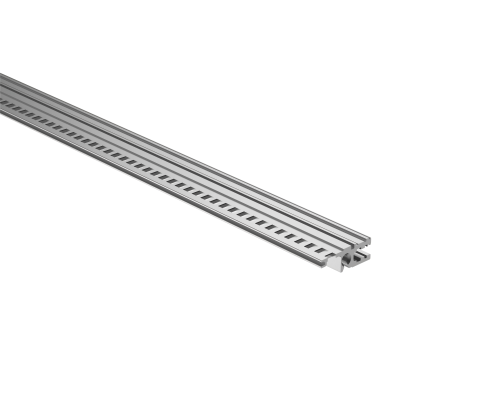
- PCB guide rails
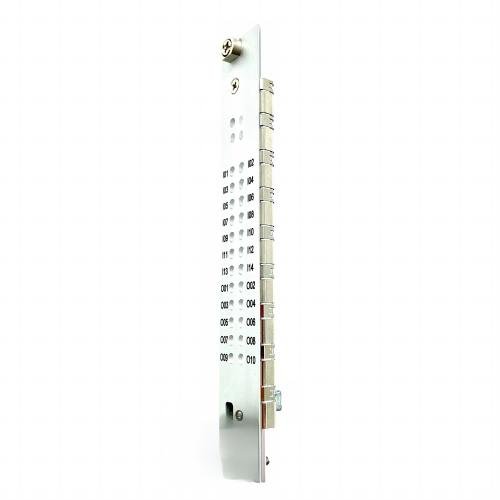
- Front panels
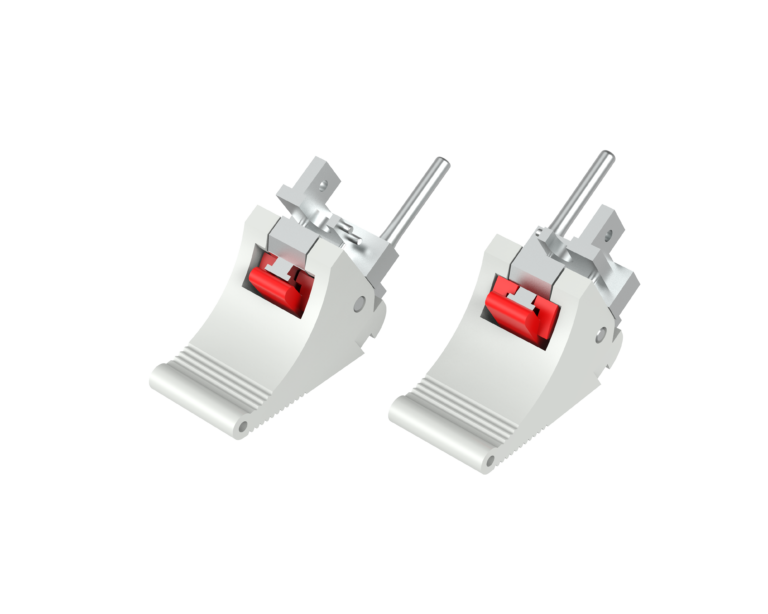
- Ejector handles
- Mounting brackets
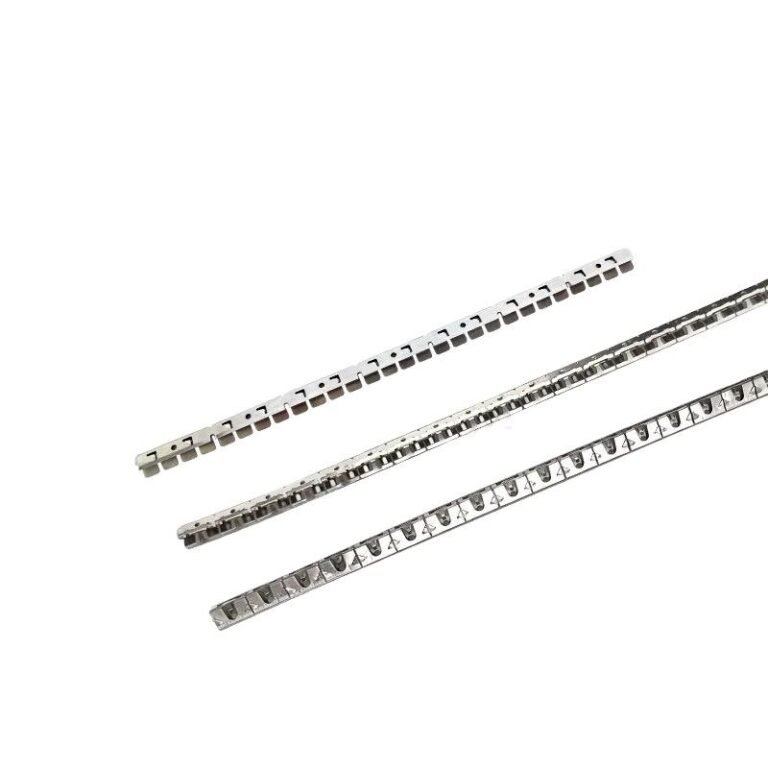
- EMC shielding components
- Grounding clips
- Rails
- Threaded inserts
- Screws and fasteners
For these products, manufacturing cost is strongly affected by:
- Material
- CNC machining time
- Sheet-metal processing
- Stamping
- Die casting
- Surface treatment
- Tooling
- Production quantity
- Assembly
- Packaging
China has a large and mature manufacturing supply chain covering these processes.
This can make China a practical sourcing option when customers need replacement components at a controlled cost.
2. You Don’t Always Need to Replace the Complete Subrack
One advantage of a replacement-parts strategy is that the customer does not necessarily need to replace an entire chassis.
For example, suppose a 15-year-old subrack is still mechanically sound, but several guide rails are damaged.
Replacing the entire subrack creates unnecessary cost.
A more practical approach may be:
Keep the existing subrack → replace the damaged components → continue using the equipment.
The same principle applies to:
- Front panels
- Handles
- Card guides
- EMC gaskets
- Mounting hardware
- Grounding components
For long-life industrial equipment, component-level replacement can help extend the service life of the existing system.
3. Custom Manufacturing Can Be More Flexible
Original manufacturers usually focus on their current product range.
A legacy component may no longer fit their standard production model.
A specialized Chinese manufacturer may instead be able to manufacture a replacement according to:
- Existing drawing
- Original sample
- Part number
- Dimensions
- Photographs
- Customer specifications
This makes custom replacement particularly useful for discontinued components.
The customer does not necessarily need to find an identical catalog product.
The objective is to reproduce the required mechanical function and interface.
4. Small-Batch Replacement Can Be Practical
Legacy equipment often creates an unusual purchasing problem.
You may only need:
- 5 guide rails
- 10 front panels
- 20 handles
- 50 grounding clips
The original manufacturer may have a high MOQ, long lead time or special-order pricing.
A supplier specializing in mechanical components can potentially combine standard manufacturing processes with small-batch production.
The actual MOQ and pricing will depend on the component, material, tooling and production process, so these requirements should be confirmed before ordering.
5. China’s Manufacturing Supply Chain Can Reduce Total Cost
The advantage of Chinese manufacturing is not only the factory labor cost.
A broader supply chain can also affect the final cost.
For example:
Aluminum → CNC machining → anodizing → inspection → assembly → packaging
or:
Sheet metal → laser cutting → bending → surface treatment → assembly
When these processes can be coordinated within an established manufacturing network, customers may reduce unnecessary supplier coordination and logistics costs.
For replacement components, this can be particularly useful when several different mechanical parts are required for the same project.
6. Engineering Support Matters as Much as Price
A low-cost component is not useful if it does not fit the existing subrack.
For this reason, replacement sourcing should involve more than a price quotation.
Before production, important questions should be clarified:
- What is the original component?
- What are the critical dimensions?
- Which dimensions are allowed to change?
- Which dimensions must remain identical?
- What material is required?
- What surface treatment is required?
- Does the component have an EMC function?
- What quantity is required?
- Is a sample available?
This engineering review can prevent the common problem of receiving a cheaper component that cannot actually be installed.
7. Cost Control Does Not Mean Ignoring Quality
For industrial replacement parts, the lowest quotation is not necessarily the lowest total cost.
A failed component can create additional costs through:
- Reinstallation
- Equipment downtime
- Emergency shipping
- Rework
- Additional inspection
- Field maintenance
A better approach is to balance:
Price + dimensional accuracy + material + surface treatment + inspection + delivery time.
For this reason, customers should define the critical technical requirements before comparing suppliers.
8. China as an Alternative Supply Source
For customers who originally purchased subrack components from European manufacturers, sourcing from China can provide an additional supply option.
This does not necessarily mean replacing the original brand throughout the entire system.
A customer may continue using the original subrack while sourcing selected mechanical components from another manufacturer.
For example:
Original subrack + compatible guide rail
Original enclosure + replacement front panel
Original chassis + replacement handle
Legacy equipment + custom EMC component
This approach can help reduce dependence on a single original source while maintaining the existing equipment.
What Should You Compare When Evaluating a Chinese Supplier?
Price should be only one part of the comparison.
Ask the supplier about:
| Item | What to Check |
|---|---|
| Material | Aluminum, steel, stainless steel, zinc alloy, etc. |
| Tolerance | Critical dimensional tolerances |
| Surface treatment | Anodizing, plating, conversion coating, etc. |
| Manufacturing | CNC, stamping, die casting, sheet metal |
| MOQ | Minimum order quantity |
| Sample | Availability of prototype/sample |
| Inspection | Dimensional and visual inspection |
| Packaging | Protection during international shipment |
| Lead time | Sample and production lead time |
| Customization | Ability to manufacture from drawings/samples |
| Long-term supply | Ability to support future replacement orders |
This gives the purchasing team a more complete picture of the actual sourcing cost.
When Does China Sourcing Make Sense?
China manufacturing can be particularly relevant when:
- The original part has been discontinued
- The original part has become expensive
- The original lead time is too long
- The required quantity is relatively small
- A custom dimension is required
- Several mechanical components are needed
- The customer wants a second source
- The equipment has a long service life
- Replacement parts need to be supplied over many years
For these situations, a specialized replacement-parts supplier can be more flexible than purchasing a complete new system.
The Objective Is Not “Cheap Parts”
For professional industrial equipment, the better question is not:
“Where can I buy the cheapest component?”
It is:
“How can I maintain the existing equipment with a technically suitable component at a reasonable total cost?”
This difference is important.
A replacement component needs to fit the existing mechanical interface, meet the required material and surface-treatment specifications, and perform its intended function.
If these requirements are satisfied, manufacturing in China can provide an additional option for controlling procurement costs while extending the service life of existing 19-inch subrack systems.
A Practical Sourcing Approach
If you are maintaining a 10–20-year-old subrack, you do not need to prepare a perfect RFQ before contacting a supplier.
Start with what you have.
Send:
1. Original part number
2. Photos
3. Dimensions
4. Drawing, if available
5. Existing sample, if available
6. Required quantity
7. Application
The supplier can then determine whether the requirement can be met with:
- A standard compatible component
- A modified standard component
- A custom-manufactured replacement
This can make the replacement process much faster and more practical.
Looking for a China-Made Alternative?
If your original subrack component is discontinued, expensive or difficult to source, SubrackParts can evaluate the requirement based on the original part number, drawing, dimensions or photographs.
We focus on mechanical components for 19-inch subrack systems, including:
- PCB guide rails
- Front panels
- Ejector/injector handles
- EMC/EMI components
- Grounding clips
- Mounting hardware
- Structural components
- Custom replacement parts
Send us the original part number, drawing, dimensions, or a photo.
We can help determine whether a standard compatible component or a custom China-made alternative is suitable for your application.