Finding a replacement component for an existing 19-inch subrack can be more difficult than it first appears. A small mechanical part may look simple, but differences in dimensions, mounting holes, PCB thickness, materials, or connector alignment can prevent a replacement from fitting correctly.
This is especially common with older electronic equipment. The original subrack manufacturer may have discontinued a component, changed its product range, increased the minimum order quantity, or stopped supplying replacement parts altogether.
If you are looking for a replacement subrack component, you do not necessarily need to redesign your entire chassis. In many cases, the original part can be identified, matched, modified, or reproduced based on technical information from the existing component.
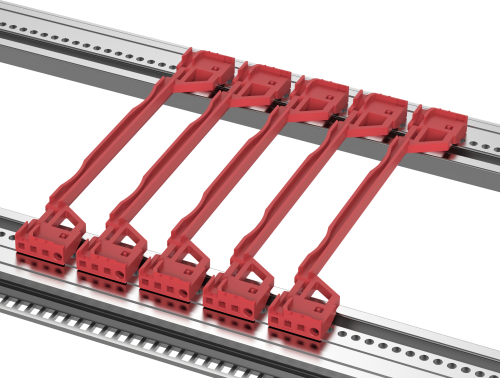
At SubrackParts, we support replacement and custom manufacturing for a wide range of 19-inch subrack components, including PCB guide rails, PCB extractors, front panels, filler panels, horizontal rails, EMC gaskets, grounding clips, and other mechanical parts.
Why Is It Difficult to Find a Replacement Subrack Component?
A subrack component is not always interchangeable simply because it has the same general appearance.
For example, two PCB guide rails may both be designed for Eurocard systems but have different:
- PCB groove widths
- Overall lengths
- Mounting methods
- Mounting hole positions
- PCB support heights
- Materials
- Retention features
A small dimensional difference can affect PCB alignment and may cause interference with the backplane connector.
The same applies to PCB extractors, front panels, EMC gaskets, and other mechanical components.
Therefore, the key question is not simply:
“Does this component look the same?”
The better question is:
“Does the replacement match the mechanical interface and functional requirements of the original part?”
What Types of Subrack Components Can Be Replaced?
Replacement requirements vary from project to project, but several types of components are particularly common.
1. PCB Guide Rails
PCB guide rails are frequently replaced when the original plastic or aluminum guide rail becomes damaged, deformed, or obsolete.
Important parameters may include:
- PCB thickness
- Guide rail length
- Groove width
- Mounting method
- Mounting hole location
- PCB height
- Subrack unit height
- Material
- Color
For a replacement PCB guide rail, dimensional compatibility is particularly important because the guide rail helps position the PCB correctly inside the subrack.
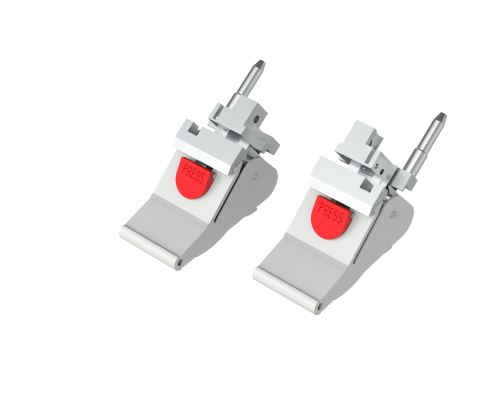
2. PCB Extractors and Injectors
Extractor handles and injector handles are often used in Eurocard, VME, CompactPCI, and other modular electronic systems.
When selecting a replacement, check:
- Handle dimensions
- Pivot position
- Mounting hole
- Rotation angle
- PCB height
- Front-panel position
- Locking or retention mechanism
If the original component is no longer available, a replacement can often be developed from a drawing, physical sample, or detailed photographs.
3. 19-Inch Front Panels and Filler Panels
Front panels may need to be replaced because of mechanical damage, equipment upgrades, or changes to the internal electronics.
A replacement front panel may need to match:
- Height
- Width
- Mounting hole spacing
- Handle position
- Cutouts
- Connector openings
- Surface finish
- Color
- Material thickness
Custom front panels can also be manufactured when the original panel is no longer available.
4. Horizontal Rails and Mounting Parts
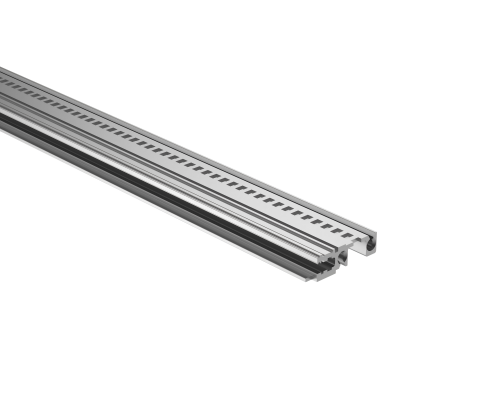
Horizontal rails, support rails, brackets, card retainers, and other structural parts can also become difficult to source for older equipment.
These components often require accurate mounting dimensions because they interact directly with the subrack frame.
5. EMC and Grounding Components
EMC gaskets, conductive gaskets, grounding clips, and fingerstock components are commonly used to maintain electrical continuity and electromagnetic shielding.
When replacing an EMC component, mechanical dimensions are important, but material and conductivity may also need to be considered.
What Information Do You Need for a Replacement?
You do not always need a complete engineering drawing to start a replacement project.
The more information you can provide, however, the faster the replacement can be evaluated.
1. Original Part Number
If the existing component has a part number, manufacturer code, or internal reference number, provide it first.
A part number can help identify:
- Original specifications
- Product family
- Dimensions
- Material
- Mounting method
- Possible replacement options
Even if the original part number is obsolete, it can still be useful for engineering research.
2. Technical Drawing
A 2D drawing or 3D CAD file is the best starting point when available.
Useful formats may include:
- DWG
- DXF
- STEP
- STP
The drawing should ideally include the critical dimensions and tolerances.
3. Dimensions
If there is no drawing, basic measurements can still be extremely useful.
Depending on the component, measure:
- Overall length
- Width
- Height
- Thickness
- Hole diameter
- Hole spacing
- Groove width
- Mounting position
- PCB thickness
- Distance between critical features
For replacement components, interface dimensions are often more important than the overall appearance.
4. Product Photos
A clear photo can help identify the component and understand its installation method.
Try to provide photos showing:
- Front view
- Side view
- Bottom view
- Mounting area
- Connection or interface area
- The component installed inside the subrack
If possible, place a ruler next to the component to provide a dimensional reference.
5. Physical Sample
For difficult or obsolete components, a physical sample can be extremely useful.
A sample allows the manufacturer to inspect:
- Actual dimensions
- Material
- Mounting features
- Surface finish
- Assembly method
- Critical interfaces
For some replacement projects, reverse engineering from an existing sample may be more practical than recreating an old drawing.
How Does the Replacement Process Work?
A professional replacement project should not begin with mass production.
A better approach is to follow a controlled process.
Step 1: Send the Original Information
Provide the part number, drawing, dimensions, photographs, or physical sample.
Step 2: Engineering Review
The manufacturer reviews the mechanical interface and identifies the critical dimensions.
For a PCB guide rail, for example, the engineering team may check PCB thickness, guide groove dimensions, mounting position, and overall length.
Step 3: Replacement Assessment
The component can then be classified as:
Direct Replacement
The existing design can be reproduced with minimal changes.
Modified Replacement
The original component can be replaced, but some dimensions or features need to be modified.
Custom Alternative
A new component needs to be developed based on the existing equipment and application requirements.
Step 4: Prototype or Sample
For critical applications, a sample should be produced before full-scale manufacturing.
This allows the customer to verify:
- Fit
- Assembly
- Alignment
- Clearance
- Function
- Appearance
Step 5: Production
After the replacement sample is approved, the component can move into batch production.
This approach reduces the risk of discovering dimensional problems after mass production has started.
What If the Original Subrack Component Is Discontinued?
Discontinued components are one of the most common reasons customers look for replacement parts.
An old subrack may still be fully functional, but a small component such as a guide rail, extractor, front panel, or EMC gasket may no longer be available.
Replacing the entire chassis or redesigning the equipment can be expensive and time-consuming.
A custom replacement component can sometimes extend the service life of the existing equipment without requiring a complete mechanical redesign.
This is particularly relevant for:
- Telecom equipment
- Railway electronics
- Industrial control systems
- Test and measurement equipment
- Semiconductor equipment
- Power electronics
- Communication systems
- Legacy electronic equipment
Can a Replacement Be Made to IEC 60297 Dimensions?
For 19-inch subrack applications, IEC 60297 is an important reference for mechanical dimensions and mounting arrangements.
However, compliance with a standard does not automatically mean that two individual components are interchangeable.
For example, two components may both be intended for a 3U Eurocard system while having different mounting details.
When replacing an existing component, the complete mechanical interface should therefore be checked rather than relying only on the nominal subrack height or width.
For this reason, providing the original dimensions or a physical sample is strongly recommended.
Replacement vs. Custom Manufacturing
Sometimes the best solution is not an exact copy.
For example, an original component may have a mounting feature that is no longer suitable for the current equipment. In this situation, a modified replacement may provide a better solution.
Custom manufacturing can be used to modify:
- Length
- Width
- Hole position
- Mounting method
- Material
- Color
- Surface treatment
- Connector cutouts
- Fixing features
This makes custom manufacturing particularly useful for retrofit projects and legacy equipment.
How to Reduce the Risk of Ordering the Wrong Replacement
Before placing a production order, confirm the following:
Mechanical Compatibility
Does the replacement fit the existing mounting location?
PCB Compatibility
For card guides and extractors, does it accommodate the correct PCB thickness and dimensions?
Alignment
Will the PCB or front panel align correctly with the backplane and neighboring components?
Material
Is the replacement material suitable for the operating environment?
Surface Treatment
Does the surface finish meet the application’s mechanical, corrosion, or electrical requirements?
Quantity
Is the supplier able to support both prototype quantities and future production requirements?
Sample Approval
Can you test a sample before committing to larger quantities?
These checks can significantly reduce the risk of receiving a component that looks correct but does not function correctly in the existing equipment.
Why Work With a Replacement-Focused Subrack Component Supplier?
A replacement project is different from purchasing a standard catalog item.
The supplier needs to understand not only the component itself but also the mechanical relationship between the component and the complete subrack system.
A replacement-focused supplier should be able to work with:
- Existing part numbers
- Customer drawings
- Physical samples
- Product photographs
- Custom dimensions
- Small-batch requirements
- OEM specifications
At SubrackParts, our focus is on 19-inch subrack components, replacement parts, and custom mechanical components for OEM, retrofit, maintenance, and equipment upgrade applications.
Our product range includes PCB guide rails, PCB extractors, front panels, filler panels, horizontal rails, EMC components, grounding accessories, and other subrack mechanical parts.
Looking for a Replacement Subrack Component?
If you cannot find the original component, you do not necessarily need to redesign your equipment.
Send us the original part number, drawing, dimensions, or a photo.
We can review the available information and help determine whether the requirement can be handled as a direct replacement, modified replacement, or custom alternative.
You can send us:
- Original part number
- 2D drawing
- 3D CAD file
- Dimensions
- Product photos
- Physical sample
- Required quantity
- Application information
Whether you need one replacement component for legacy equipment or a long-term supply of custom subrack parts, providing the original component information is the best place to start.
Need help finding a replacement? Send us your part information and let us review it.